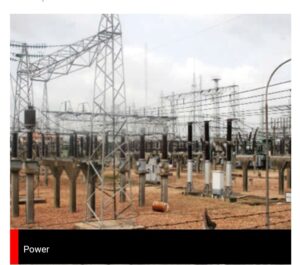
Lagos, Kano, and 10 other states have concluded plans to start generating power in their respective states in conformity with the Electricity Act 2023.
The PUNCH gathered on Thursday that some of these states had established their electricity market laws and were waiting for the approval of the Nigerian Electricity Regulatory Commission to have independent regulatory bodies different from the NERC owned by the Federal Government.
As the states stepped up efforts to generate electricity, the Federal Government’s 240 per cent power tariff hike for consumers in Band A enjoying 20-hour electricity attracted more condemnations on Thursday.
Groups including the Petroleum and Natural Gas Senior Staff Associations of Nigeria, civil society organisations and the Nigeria Electricity Consumer Advocacy Network warned that the hike would worsen the plight of Nigerians.
The subsidy on electricity has been withdrawn completely from the tariff payable by power consumers in the Band A category, who constitute about 15 per cent of the total number of power users across the country.
The government, through the NERC, announced the hike in the electricity bill on Wednesday, adding that those affected would now pay a tariff of N225 per kilowatt-hour, up from the previous rate of N68/kWh, representing about 240 per cent increase.
However, there are strong indications that many states are taking advantage of the new Electricity Act to establish their electricity generation firms.
In June 2023, President Bola Tinubu signed a new Electricity Act into law, heeding the calls of Nigerians that the power sector be reformed and removed from the exclusive list, to give states the power to generate, transmit and distribute electricity within their jurisdiction. This, Nigerians believe, would help in proffering lasting solutions to the electricity problems in Nigeria.
The PUNCH reports that the new law replaces the 2005 Electricity and Power Sector Reform Act as it seeks to promote private sector investments in the power sector. It provides for a holistic integrated resource plan and policy that recognises all sources for the generation, transmission, and distribution of electricity.
Electricity Act
The new act permits the state electricity board or any state authority by whatever appellation, to grant licence for mini-grids and provide the framework for the operation of such licensees. With this, the Federal Government has succeeded in removing electricity from the exclusive list, allowing states and private individuals to invest in the sector.
Though a state can regulate its electricity market by issuing licences to private investors who can operate mini-grids and power plants within the state, the act, however, says that until a state has passed its electricity market laws, the NERC will continue to regulate electricity businesses in such states.
Inner sources at the NERC told The PUNCH that at least, 12 of the 36 Nigerian states were set to have their own independent electricity regulatory commissions following the enactment of the 2023 Electricity Act.
It was reliably gathered that the states had applied to the NERC, seeking independence in regulating their electricity markets without the interference of the Federal Government commission.
The NERC official, who spoke on the condition of anonymity because he was not allowed to speak on the issue, hinted that the NERC, which is presently regulating the Nigerian electricity market, must transition regulatory responsibilities from itself to state regulators when they are established.
“This means that, until a state has passed its electricity market laws, NERC will continue to regulate electricity businesses in such states. 12 states have applied to have their regulatory commissions and once the necessary things are done, the NERC will no longer regulate electricity in those states.
The states will be on their own. That will allow them to generate, transmit and distribute power within their states only. Some of them who have been generating power before the act can now commercialise it and even grant licences to investors to invest in their states,” the source said anonymously.
Another source said, “I can confirm that 12 states have applied to have their regulatory bodies. But I can’t give you the details. Our legal team is still working on the requests by the states.”
Similarly, a source close to the Minister of Power, Adebayo Adelabu, confided in one of our correspondents that 12 states were ready to start generating electricity in their states, saying more states should follow suit to solve the nation’s electricity challenges.
The PUNCH reports that Nigerians have continued to languish under a deteriorating power sector supervised by the Federal Government for many years. On many occasions, the national power grid keeps collapsing, plunging the nation into blackouts while affecting businesses.
The power grid collapsed 46 times in six years, according to a report by the International Energy Agency.
As a way of ending the power problems in their domains, some states appear to be leaving no stone unturned. As of February, checks with the Ministry of Power revealed that Lagos, Edo, Kaduna, Enugu, and Oyo have signed their electricity laws.
Ekiti project
Ekiti State Commissioner for Information, Taiwo Olatunbosun, said that the state government had domesticated the Electricity Law, stating that it had been generating and transmitting electricity through the Independent Power Project.
Olatunbosun said, “We have domesticated the Electricity Law here in Ekiti State. The IPP that we have is doing well. The state government plans to upgrade it to 5MW and from there, we improve and establish some other areas.
“The places and businesses the IPP is presently servicing include the Government House, government offices, State Secretariat, Ekiti State University Teaching Hospital and we are extending to Ekiti State University as well. It is equally servicing some conglomerates and other people who are already requesting for it”.
The commissioner said that the present administration in the state would continue to provide strategic interventions in electricity and other infrastructural development “to make Ekiti a destination for investors and uplifting the social life of our people and others promoting their business without any form of challenges that power generation may cause now and in the nearest future.”
According to him, the present IPP structure was built to accommodate future expansion to about 5mw from its present 3.6mw capacity.
The Commissioner for Information and Strategy, Gbenga Omotosho, in an interview with our correspondent on Thursday said following the passage of the Electricity Act, Lagos had been at the forefront of championing independent power generation.
Omotosho said, “Lagos has been at the forefront of unbundling power generation and power distribution systems. Lagos was the very first to start an independent power project in the days of Asiwaju Bola Tinubu as governor, who is now our President.”
He said although the project could not fly then due to some constraints, Lagos did not give up.
“For Lagos State, everything is being put in place to ensure that our people can enjoy stable electricity. We are all for it because it’s about our people.
“We’re having discussions with so many entities in the private sector on how Lagos can generate its electricity, and people have been showing interest,” Omotosho stated.
The Benue State Government disclosed that it had put efforts in top gear to establish its electricity firm.
The state Commissioner for Power and Transport, Omale Omale, who spoke to one of our correspondents on Thursday stated that the state had begun its transmission programme and policy in the power sector.