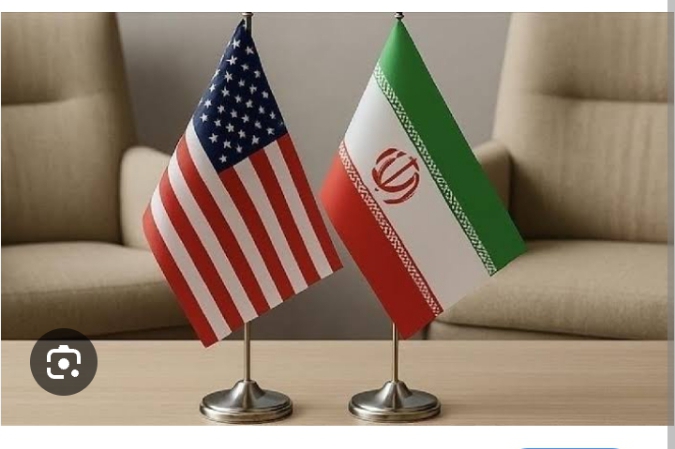
Why Confronting Iran’s Nuclear Ambitions Is About Global Security-Not the Epstein Distraction
In recent days, one of the most puzzling arguments circulating on social media is the claim that the ongoing United States military operation Epic Fury against Iran by, alongside Israel operation Roaring Lion, is merely an attempt to distract from the controversy surrounding the files. This claim is not only misleading but also ignores years of consistent U.S. policy toward Iran’s nuclear ambitions.
Long before the current tensions, President Trump made it clear that under no circumstances would he allow Iran to acquire nuclear weapons or develop long-range missile capabilities. This reason is very simple, Washington as well as its allies believes the government in Tehran cannot be trusted with such dangerous weapons.
Iran has long been accused of financing and supporting several militant groups across the Middle East, including in Gaza, the organization in Lebanon, and the movement in Yemen. These groups have played significant roles in destabilizing the region and escalating tensions with Israel and treating the interest of United States.
The concern about Iran acquiring nuclear weapons is not limited to one political party in the United States. Presidents from both parties Democrats and Republican over the years have consistently warned that a nuclear-armed Iran would make the world significantly less safe. In fact, many countries in the Middle East share this concern. Nations such as Saudi Arabia, the United Arab Emirates, Bahrain, Qatar, Kuwait, and Turkey along with several others across the region have expressed serious reservations about Tehran developing nuclear capabilities.
Critics have also long debated the effectiveness of President Obama 2015 nuclear agreement negotiated during the administration. It was discovered that the deal provided Iran with financial relief without permanently dismantling its nuclear infrastructure. Some analysts believe that the financial resources released to Iran were partly used to strengthen Hamas, Houthis and Hezbollah who regional proxy groups funded by Ayatollahs.
In my opinion I believed Obama Administration really help the Iranian to accelerate the development of its nuke.
Despite the Democrats and media criticism of this current administration regardless of how it benefits the interest of United States. President Trump has repeatedly portrayed himself as a leader seeking peace through negotiation and deterrence. His administration has often emphasized the concept of “peace through strength,” arguing that firm pressure can prevent larger conflicts.
On March 7, 2025, President Trump announced that he had sent a letter to Iran’s Supreme Leader, proposing renewed negotiations over Iran’s nuclear program. In the letter, Trump warned that failure to reach an agreement could result in serious military consequences.
The proposal reportedly required Iran to fully dismantle its nuclear program, halt all uranium enrichment, and end its support for regional proxy groups within two months. In return, the United States offered the possibility of lifting sanctions and normalizing relations with Tehran.
According to reports from negotiations, U.S. envoy Steve Witkoff stated on Fox News that Iranian negotiators claimed they possessed roughly 460 kilograms of uranium enriched to 60 percent purity. Such statements naturally raised alarm in Washington, as uranium enriched to that level is considered dangerously close to weapons-grade material.
It is important to note that there is no American president regardless of party would ignore this kind of statement.
In Nigeria and across social media, many observers are taking sides in the conflict largely through religious or emotional lenses. However, the issue at stake goes beyond religion. At its core, the debate revolves around global power dynamics, regional stability in the Middle East, and the broader question of nuclear proliferation.
Ultimately, supporters of the current U.S. policy argue that strong leadership and decisive action are necessary to prevent a more dangerous future.
For them, the guiding principle remains simple: peace through strength.