Beyond the Hype: U.S. Strikes Iran’s Nuclear Sites, But another World War Is an Illusions
In April 2025, U.S. and Iranian officials held several rounds of indirect nuclear talks in Oman, Rome, and Muscat. Despite initial signs of progress, tensions soon escalated. The United States increased its military presence in the region, while Iran proposed building 19 new nuclear reactors.
A formal letter reportedly set a 60-day deadline for Iran to reach an agreement. That deadline passed without resolution.
By late May, former President Donald Trump claimed a nuclear deal was within reach, but Iranian officials remained doubtful. Israel, on the other hand, threatened military action. Around the same time, the International Atomic Energy Agency (IAEA) confirmed that Iran had amassed a large stockpile of enriched uranium.
In early June, U.S. embassies across the region began evacuating staff amid rising threats. Then, on June 13, Israel launched a major airstrike on Iranian targets, prompting Iran to suspend all nuclear negotiations.
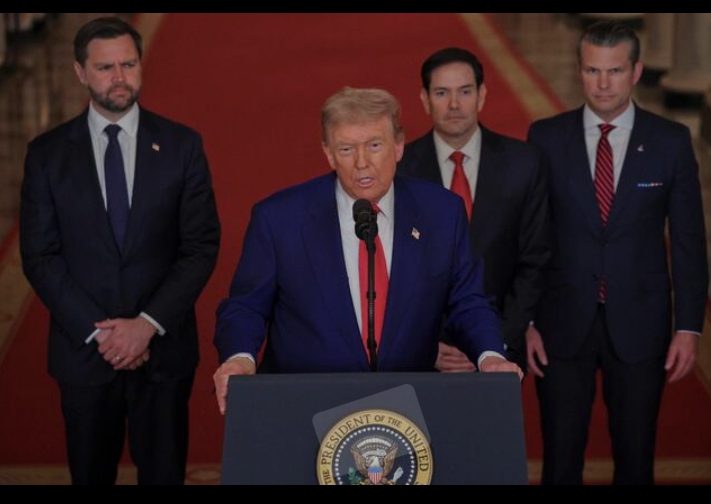
On June 21, 2025, President Trump publicly confirmed that the United States Air Force and Navy had conducted coordinated attacks on several of Iran’s major nuclear facilities, including the Fordow Fuel Enrichment Plant, the Natanz Nuclear Facility, and a site in Isfahan. These strikes involved more than a dozen 30,000-pound GBU-57A/B bunker-buster bombs deployed by B-2 Spirit stealth bombers, as well as Tomahawk missiles launched from U.S. submarines. These facilities were among Iran’s most significant uranium enrichment sites.
The Fear of Retaliation — Reality or Illusion?
It is understandable that many are concerned Iran could retaliate by targeting U.S. military bases or activating sleeper cells through proxies like Hamas, Hezbollah, and the Houthis. Even Arab nations share this fear. However, I believe these concerns are largely exaggerated.
Why? Because in today’s world, most nations including Iran are more interested in trade, prosperity, and economic power than war. The fear of a third World War is overblown. If close allies like Russia and China, both nuclear powers with strong economic ties to Iran, have not yet stepped in meaningfully, it is unlikely they will do so in the event of a full-scale conflict.
Iran continues to sell large quantities of oil to China and has strategic relations with the Kremlin. But even that hasn’t translated into concrete support in the face of direct U.S. and Israeli military actions.
As for activating sleeper cells, doing so requires a combination of high-level intelligence coordination, assets, funding, and skills. I doubt Iran has the capability to carry out such sophisticated operations on a global scale especially under the intense watch of international intelligence agencies like Mossad, CIA, MI6, and others. Any attempt at revenge will not be a walk in the park.
Geopolitical Isolation
Iran’s geographic reality also works against it. While Iran shares borders with 13 countries, most of its neighbors have closer strategic or economic ties with the United States and its allies than with Tehran.
Countries directly bordering Iran include:
To the west: Iraq
To the south: Kuwait, Saudi Arabia, Qatar, Bahrain, United Arab Emirates (UAE)
Others: Turkey, Azerbaijan, Armenia, Turkmenistan, Afghanistan, Pakistan
Notably:
Jordan has previously intercepted missiles allegedly sent from Iran toward Israel.
Pakistan is currently enjoying strong diplomatic relations with Washington and has even nominated President Trump for a Nobel Prize.
Saudi Arabia, Qatar, and the UAE recently made trillions of dollars in investments in the U.S.
Syria (Damascus) is also leaning westward after U.S. sanctions were lifted, thanks to mediation by Saudi Crown Prince Mohammed bin Salman (MBS).
In rhetoric, Tehran may claim it has loyal allies—but in practical and geopolitical terms, Iran stands increasingly isolated.
A Final Word to Tehran
Once again, my humble advice to Tehran is simple: abandon your nuclear ambitions for the sake of your people’s prosperity. Choose peace over provocation. The road to global relevance today is not through defiance, but through diplomacy, economic cooperation, and regional stability.
Oladigbo Olalekan Efficient writes from Lagos, Nigeria
efficientolalekan@gmail.com